FIG. 05 — Case study
Luzso-Car
Two Óbuda workshops, one black-and-yellow brand site: hand-crafted pages, a full MDX blog engine, real Google reviews — and a contact form that answers itself within moments.
- Client
- Luzso-Car — auto body & service, Budapest
- Year
- 2026
- Role
- Brand site + blog engine + automation
- Status
- Live Visit site ↗
- Stack
- AstroMDXn8nnginxCoolify
The challenge
You hand your car to a stranger.
Luzso-Car does auto body repair, paint work and quick service in two workshops in Óbuda, Budapest. In this trade, trust is the currency: the customer hands their car to a stranger, and much of that decision is made by what they see of the shop before they ever drive in.
So the brief was twofold. Build a brand-grade site that carries the shop's character — and put a system behind it that delivers the trust: real reviews, real work with photos, and a form that leaves no enquiry unanswered.
Brand and pages
Black base, hazard-stripe yellow
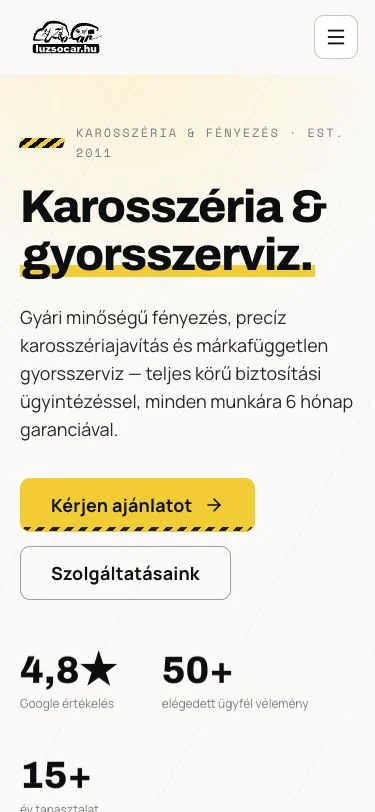
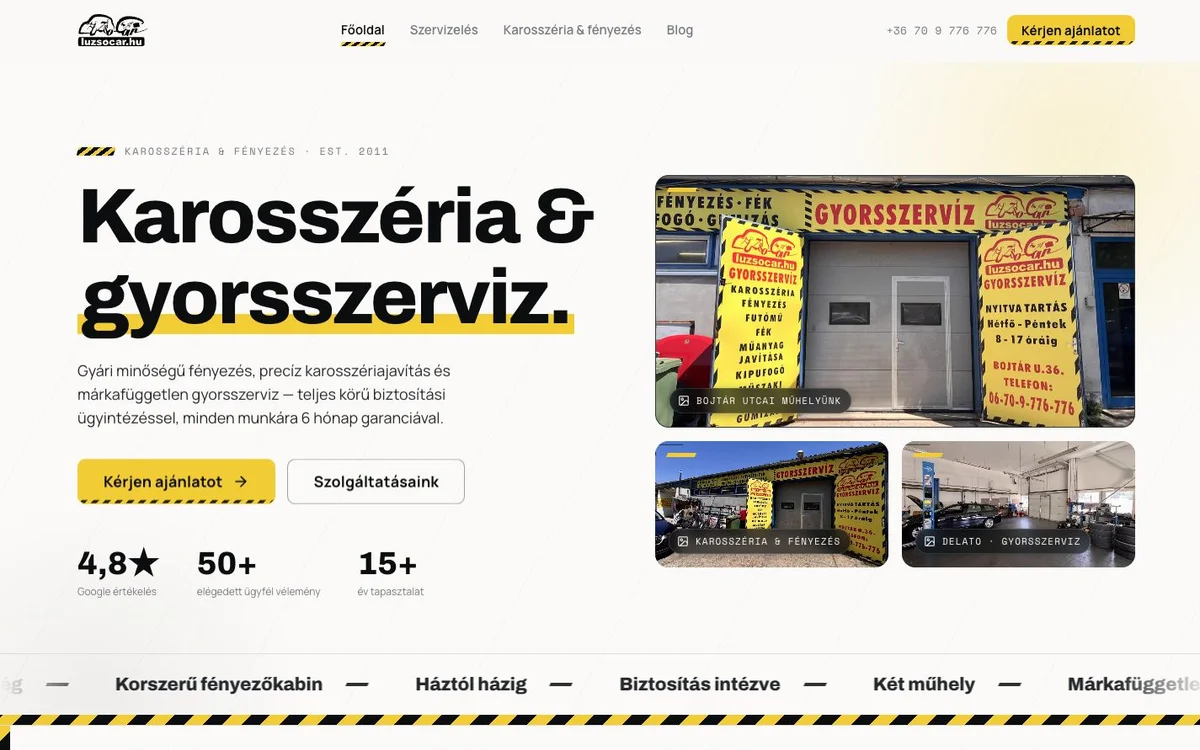
The identity speaks the language of the workshop yard: a black base with barrier-tape yellow as the signal color. It became a set of custom design tokens — no framework, vanilla CSS, every pixel of the look under control.
Three hand-crafted marketing pages — home, service, body shop — share a single layout. The hero animates the 4.8★ average rating up from real Google reviews.
Blog engine
A blog engine with no admin panel
Behind the site sits a full MDX blog engine on Astro content collections: table of contents, BlogPosting JSON-LD, breadcrumbs, category archives, RSS and Facebook share cards — all statically generated.
And it didn't launch empty: four real posts went live with it, cross-posted to Facebook. For a workshop blog, that's the difference between a prop and a working channel.
Building trust
The proof: reviews and a Škoda
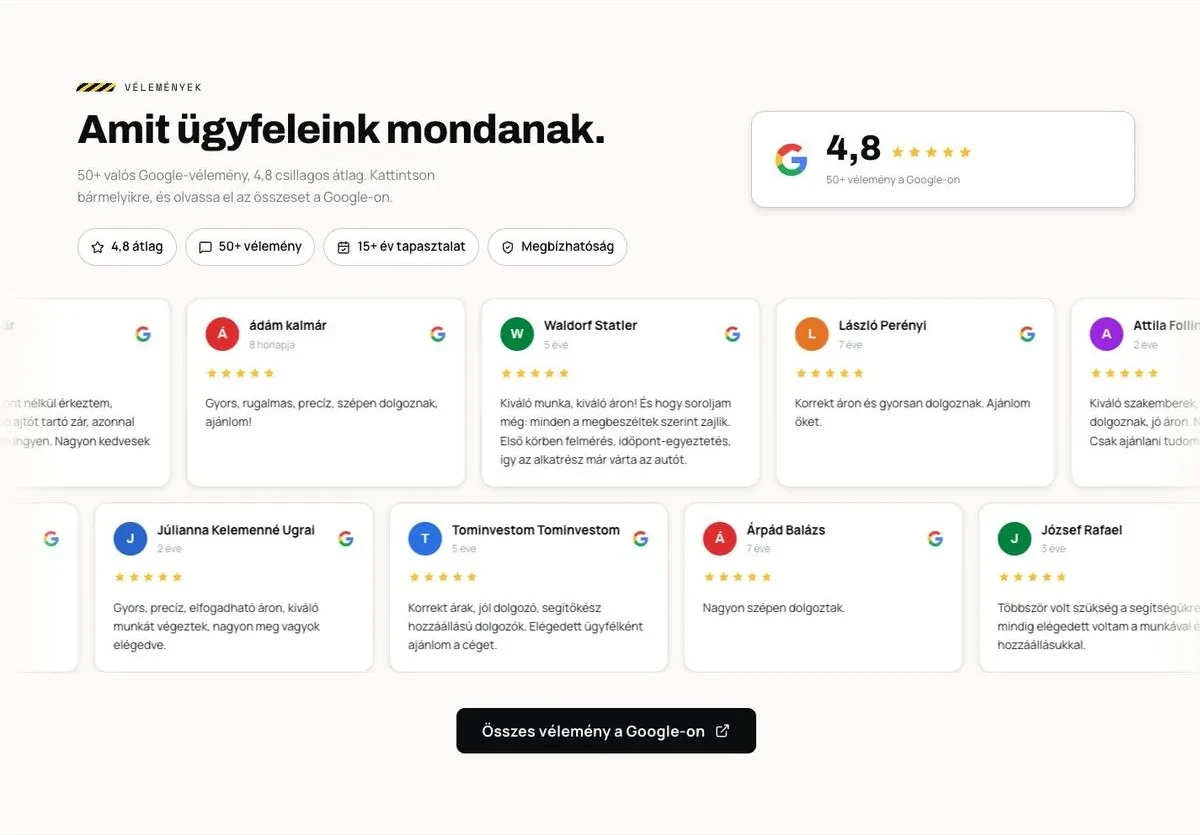
The site carries 21 curated, real Google reviews — 4–5 star only, selected with legal care. Reviews here aren't decoration: they live in the system, with names and full text.
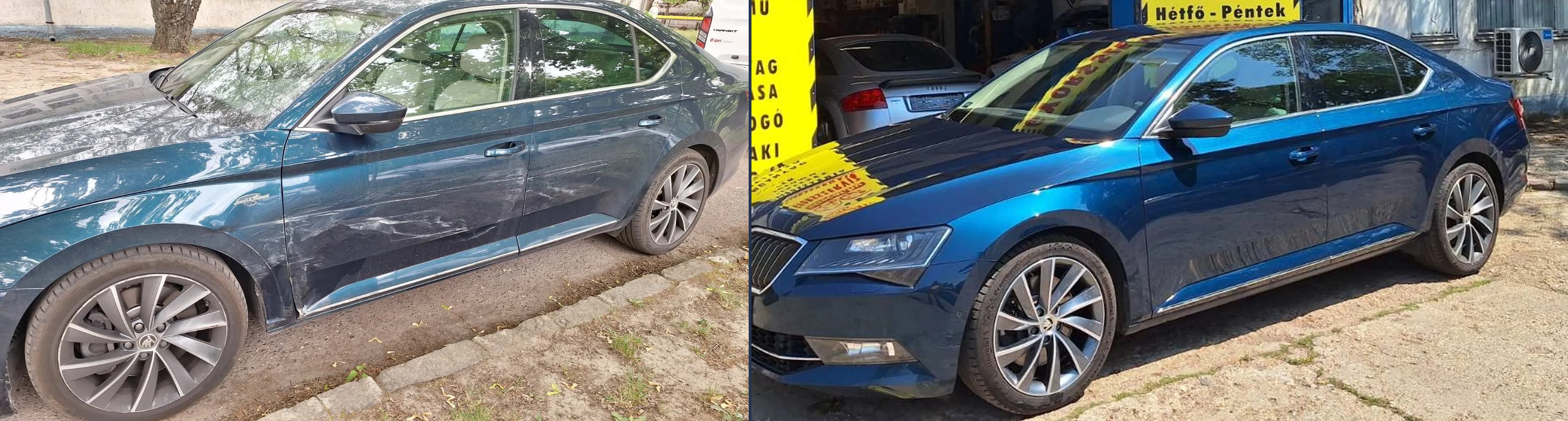
Next to them, a real case: one Škoda's repair told as a before–after photo story with a lightbox. In body work, the photo is the proof — the site takes that seriously.
Automation
What happens when someone writes?
The form is small, but it behaves like a system: whoever writes gets a personalized reply from the shop's own Gmail address within moments. No enquiry waits in silence.
-
FORMSPARK
A message arrives
The customer writes through the Formspark form: a honeypot filters spam, inline validation catches broken fields — and if anything fails, a mailto fallback carries the message through.
✓ message received — spam check OK
-
N8N — WEBHOOK
The webhook takes over
The submission lands on an n8n webhook: the workflow reads the details and assembles a personalized reply.
✓ webhook received — reply assembled
-
GMAIL
A reply, within moments
The reply goes out automatically from the shop's own Gmail address — the customer hears back before they'd even start looking elsewhere.
✓ automatic reply sent
Engineering
Under the hood
The site is static Astro with a build-time SEO gate: a broken title or description never reaches production. Content-hash cache busting, self-hosted latin-ext WOFF2 fonts — Hungarian ő and ű are non-negotiable — and AutoRepair JSON-LD with both locations, so Google sees both workshops for what they are.
Deployment is Dockerfile→nginx on Coolify/Hetzner: main branch to prod, staging behind Basic Auth, GitHub Actions CI. Analytics is deliberately absent — it ships only once it can run consent-gated.
Results
A small shop site, a complete system.
- locations in one schema system
- 2
- curated Google reviews in the system
- 21
- average rating in the hero animation
- 4.8★
- launch blog posts, cross-posted to Facebook
- 4
- customer enquiries left waiting for a reply
- 0
Traffic figures are deliberately absent for now — analytics ships only with a consent-gated setup.